
When it comes to building a strong and lasting structure, the foundation is everything. One of the most critical decisions engineers and developers face is choosing between bored piling vs driven piling. Both methods differ significantly in technique, cost, noise, and suitability for different site conditions. If you are planning a construction project in Mumbai and looking for reliable bored pile services in Mumbai, understanding this comparison will help you make a smarter, more cost-effective decision. In this blog, Vijay Infra breaks down every important aspect of bored piling vs driven piling so you can confidently choose the right foundation method for your project.
What Is Bored Piling?
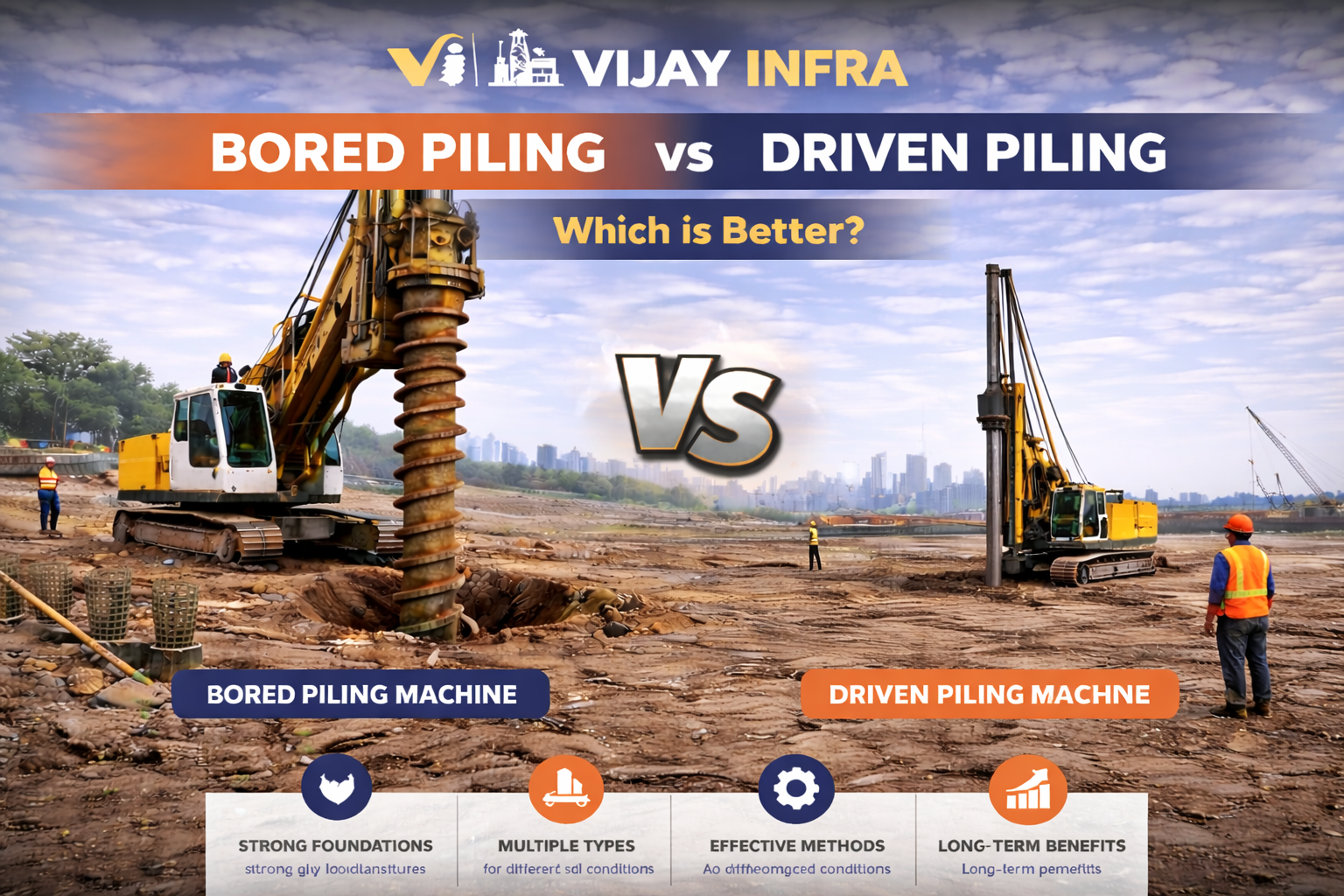
Bored piling, also known as cast-in-situ piling or rotary bored piling, is a deep foundation technique where a hole is mechanically drilled into the ground using a hydraulic rotary rig or auger machine. Once the borehole reaches the required depth, a reinforcement cage is lowered into the hole, and concrete is poured to form the pile. This method produces minimal noise and vibration, making it highly suitable for urban and densely populated areas.
Vijay Infra specialises in this technique, offering precision-driven bored piling vs driven piling assessments before recommending the right solution for each project. Bored piles can be installed up to 60 metres deep, support large-diameter foundations, and perform exceptionally well across varied soil profiles including clay, sand, soft rock, and reclaimed coastal land all of which are commonly found across Mumbai’s diverse terrain.
What Is Driven Piling?
Driven piling is a method where pre-manufactured piles made of concrete, steel, or timber are physically hammered, vibrated, or pressed into the ground using a pile-driving machine or drop hammer. Unlike bored piling, the soil is not removed instead, it is displaced as the pile penetrates deeper. This method is generally faster on open sites where space and equipment access are not a limitation.
However, when comparing bored piling vs driven piling, driven piling generates considerable noise and vibration, which can cause disturbance to adjacent structures, underground utilities, and surrounding communities. It is best suited for infrastructure projects such as bridges, jetties, marine structures, and highway flyovers where open, uncongested land is available.
Bored Piling vs Driven Piling: Key Differences Explained
When evaluating bored piling vs driven piling, several technical and practical factors come into play. These differences directly influence which method is right for your specific project.
Noise and Vibration Bored piling is a low-vibration, low-noise process, making it the preferred choice in urban areas, near existing buildings, hospitals, schools, and busy commercial zones. Driven piling, on the other hand, creates high levels of vibration and impact noise that can disturb surroundings and even damage nearby infrastructure if not carefully managed.
Soil Suitability Bored piling performs well across a wide range of soil types clay, sandy, gravelly, mixed, and even rocky ground as the drilling process can adapt to subsurface conditions. Driven piling works best in uniform, soft-to-medium soils. On harder ground, driving becomes difficult and equipment stress increases significantly.
Load-Bearing Capacity Both methods can achieve high load-bearing capacity, but bored piles offer greater flexibility in diameter and depth, allowing engineers to customize the pile design to meet exact structural demands. The diameter of bored piles can range from 300 mm to over 1,500 mm depending on the project requirements.
Construction in Confined Spaces Bored piling vs driven piling in tight urban sites clearly favours bored piling. Hydraulic rigs used in bored piling are compact and can operate even in areas with limited headroom and restricted access. Driven piling equipment, including the pile driver and crane, demands significantly more space and open working area.
Ground Heave and Soil Disturbance Driven piling displaces soil, which can lead to ground heave an upward movement of adjacent soil potentially affecting nearby structures. Bored piling removes soil from the borehole and does not cause heave, making it safer for sites in close proximity to existing buildings.
Cost Considerations The overall cost of bored piling vs driven piling depends on site conditions, pile depth, pile diameter, and project scale. Driven piling may have lower material costs for smaller projects on suitable ground. However, bored piling tends to offer better value over the long run in complex urban environments due to fewer risks, greater precision, and reduced potential for adjacent structure damage.
Time of Installation Driven piling can be faster on straightforward open sites with predictable soil conditions. Bored piling requires drilling, placing reinforcement, and concrete pouring which takes more time per pile but ensures superior quality control and structural integrity.
Why Bored Piling Is the Preferred Choice in Mumbai
Mumbai’s unique geological landscape characterised by soft marine clay, reclaimed land, coastal fill, and basaltic rock at varying depths makes bored piling vs driven piling a decisive comparison in favour of bored piling for most urban projects. High-rise residential towers, commercial complexes, metro infrastructure, and coastal developments all demand deep, reliable, and non-disruptive foundation solutions.
The city’s high population density, proximity of existing structures, and underground metro tunnels make driven piling a risky and impractical option across most of Mumbai. Vijay Infra’s expert bored piling vs driven piling evaluation process ensures every project receives a structurally sound, site-specific, and regulation-compliant foundation solution. Their experienced geotechnical engineers conduct thorough soil investigations before finalising pile dimensions, reinforcement specs, and concrete mix designs ensuring zero compromise on quality and safety. For end-to-end foundation solutions, trust bored pile services in Mumbai by Vijay Infra to deliver results that last.
Environmental and Safety Considerations
From an environmental standpoint, bored piling vs driven piling comparison again favours bored piling. The bored piling process generates far less noise pollution, reduces structural vibration risks, and has a smaller environmental footprint on congested urban construction sites. Driven piling, when used near water bodies or marine zones, can also disturb aquatic ecosystems due to high-impact vibrations transmitted through the ground and water.
Vijay Infra follows strict environmental and safety protocols on all bored piling projects, ensuring worker safety, minimal site disruption, and full compliance with Mumbai’s local authority guidelines and IS code standards for deep foundation work.
When Should You Choose Driven Piling?
While bored piling is clearly the superior choice for most Mumbai-based urban projects, there are certain scenarios where driven piling remains relevant. Driven piles are appropriate for jetty construction and marine port foundations, remote infrastructure projects with open land and no adjacent structures, projects requiring precast concrete piles for speed of installation, and temporary foundation solutions for short-term structures. However, even in these cases, a site-specific evaluation by a qualified foundation engineer like those at Vijay Infra is strongly recommended before proceeding.
How Bored Piling Supports Mumbai’s Growing Infrastructure
Mumbai’s rapidly expanding construction landscape demands foundation solutions that are precise, safe, and built for long-term performance. The soil across Mumbai varies dramatically from soft marine clay and coastal reclaimed land to hard basaltic rock found at deeper levels in suburban zones. This complex underground profile requires advanced techniques like rotary bored piling, cast-in-situ pile construction, and thorough geotechnical soil investigation before any work begins.
Vijay Infra understands these ground realities exceptionally well. Their team conducts detailed soil profiling, selects appropriate pile diameter and depth, and uses bentonite slurry support wherever borehole stability is a concern. Every pile is tested through pile integrity testing and pile load tests to meet IS 2911 standards. When evaluating bored piling vs driven piling for your project, choosing a technically sound contractor like Vijay Infra makes all the difference between a foundation that merely holds and one that truly performs.
Frequently Asked Questions (FAQs)
- What is the main difference between bored piling vs driven piling? Bored piling involves drilling a hole into the ground and casting concrete in-situ, while driven piling involves hammering or pressing pre-made piles into the soil. Bored piling is low-noise and suitable for urban areas, while driven piling is faster on open sites but generates significant vibration.
- Which piling method is better for high-rise buildings in Mumbai? For high-rise buildings in Mumbai, bored piling is almost always the preferred choice due to the city’s mixed soil conditions, urban density, and proximity of existing structures. Vijay Infra provides expert bored pile services in Mumbai specifically designed for high-rise and commercial developments.
- Is bored piling more expensive than driven piling? The cost of bored piling vs driven piling depends on the project. Bored piling may have slightly higher upfront costs per pile but often delivers better long-term value by reducing risks, avoiding structural damage to adjacent buildings, and meeting precise load requirements.
- How deep can bored piles go? Bored piles can be installed to depths of up to 60 metres or more, depending on soil conditions and project requirements. Vijay Infra uses advanced hydraulic rotary rigs capable of achieving the required depth and diameter for any type of construction project.
- Does driven piling damage nearby buildings? Yes, driven piling generates significant vibration and ground heave, which can crack walls, damage foundations, and disturb underground utilities in nearby structures. This is one of the primary reasons bored piling vs driven piling evaluations consistently recommend bored piling for dense urban areas.
- What soil conditions are best for bored piling? Bored piling is highly versatile and works effectively in clay, sand, gravel, mixed soils, and even rocky ground. It is particularly well-suited to Mumbai’s layered soil profiles that include soft marine deposits, reclaimed fill, and underlying basalt rock.
- How long does bored piling take compared to driven piling? Driven piling is generally faster per pile on suitable open sites. Bored piling takes longer per pile due to drilling, reinforcement placement, and concrete pouring, but offers superior quality control. For complex urban projects, Vijay Infra plans bored piling schedules efficiently to minimise delays.
- What is the maximum diameter of a bored pile? Bored piles can range from 300 mm to over 1,500 mm in diameter. Larger diameters provide higher load-bearing capacity and are used for heavy commercial, industrial, or infrastructure projects. Vijay Infra designs and installs bored piles of all required diameters based on structural and geotechnical requirements.
- Is bored piling suitable for residential construction in Mumbai? Absolutely. Bored piling is highly suitable for residential construction, especially for multi-story and high-rise residential buildings in Mumbai. Its low noise and vibration make it neighbour-friendly and compliant with Mumbai’s strict urban construction regulations.
- Why should I choose Vijay Infra for bored pile services in Mumbai? Vijay Infra brings years of proven experience, a team of certified geotechnical engineers, advanced hydraulic rotary rigs, and a commitment to quality and on-time delivery. From soil investigation to final pile testing, Vijay Infra manages every stage of the bored piling process with precision and professionalism making them a trusted name for foundation solutions across Mumbai.
Conclusion
When it comes to the debate of bored piling vs driven piling, the answer for most urban construction projects especially in a complex, densely populated city like Mumbai is clear: bored piling is the safer, smarter, and more reliable foundation method. It offers greater depth capability, higher load-bearing flexibility, minimal disturbance to surroundings, and adaptability to varied soil conditions. While driven piling has its place in specific infrastructure and marine applications, it cannot match the precision, safety, and urban suitability of bored piling for the kind of construction challenges seen across Mumbai every day.
Whether you are building a residential tower, a commercial complex, an industrial facility, or a critical infrastructure project, Vijay Infra has the expertise, equipment, and experience to deliver foundation solutions that are built to last. For professional, reliable, and high-performance bored pile services in Mumbai, get in touch with Vijay Infra today and lay the strongest foundation for your project’s future.